Fully understand dukkha.
To learn to be fully present and whole in the world, we need to learn to look deeply into our own lives and the human condition. The Buddha taught this as the very basis of the journey of awakening.
The journey of self-discovery and awakening is not a journey outside ourselves, but a pilgrimage to the very center of our being. It is more about being than doing, more about going deeper than exploring wider.
How are we to look at the reality of the human predicament in order to gain insight and understanding? The Buddha use a very simple method of contemplation called the three marks of existence, otherwise known as the three seals.
It is impermanent. It is the nature of dukkha. It is not-self, or empty.
These three marks of impermanence, dukkha and selflessness or emptiness inform our perspective and contemplation. These three marks are a lens through which we see our experience in meditation.
Observing the body, we can see clearly that it is impermanent, the nature of dukkha, and not-self.
Observing feelings, we can see clearly that it is impermanent, the nature of dukkha, and not-self.
Observing mind and thoughts, we can see clearly that it is impermanent, the nature of dukkha, and not-self.
Observing phenomena, whether sights, sounds, smells, tastes or touch, we can see clearly that it is impermanent, the nature of dukkha, and not-self.
Contemplating these three marks, there is no need to reject our experience or present condition. In order to truly contemplate these three marks, we must look at our present condition the way it is. By looking into our own life, we approach the very nature of reality itself.
As we learn to be truthful to our own life and the human predicament that we find ourselves in, we find that we are right on the very threshold of awakening. There is no where to go, and no one else can make this journey for us. You are the doorway and the one who must pass through. There is no where else to look but within.
As our self-awareness deepens, our connection and compassion for others naturally grows and warms. The separation that we see between ourselves and others becomes less distant as we learn to be less separated from ourselves and the world around us. As self-awareness deepens and compassion grows, we discover a means of living fully in the world. We rediscover the very ground of being, the primordial state from which we have never parted but rarely recognize.
When you fully understand the human predicament, or dukkha, by contemplating the three marks, you are at home in the world. Understanding deepens our presence and belonging, and these are among the greatest gifts we can bring into the world.

Clarify your practice. Let your practice clarify you.
Monday, March 18, 2019

Wednesday, March 13, 2019
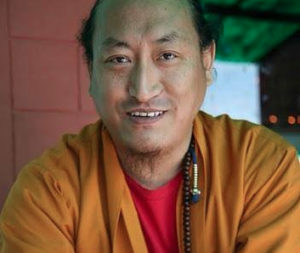
Retreat with Younge Khachab Rinpoche
Dzogchen Introduction and Instruction
Rinpoche will be giving a Dzogchen introduction and teaching his terma
text entitled “The Three Ah’s”, which directly introduce our own pure
awareness or rigpa. Rinpoche will be presenting these teachings from the
point of view of one’s practice based on his own extensive
contemplation and experience. This is a rare opportunity to receive
teachings and instruction from a true Dzogchen master.
May 4 - 5, 2019
10am to 5pm
Wise Orchid Taijiquan and QiGong
2002 E Union St, Seattle, WA 98122
- $150.00 – Program Price
Monday, March 11, 2019
Two ways of seeing.
In the Dzogchen tradition, we usually meditate with our eyes open. The eyes are an ancient symbol of presence. The opening of the eyes is a proclamation of presence. When a child first enters this world, it is the opening of their eyes that signifies their entry into this world. When we are tending to someone who is sick, for days or weeks their eyes can remain closed and we may wonder about their condition, but when they open their eyes we know they are present and with us once again.
As we learn to rest in open presence, we must learn a new way of seeing the world. This new way of seeing creates the world anew, for the world has only ever existed for us in the way that we see it.
Our old way of seeing was one of distance and separation. We look out, and see at a distance some object or person. I am here and the tree is across the way.
The new way of seeing is of oneness and intimacy. Everything in our field of vision is one with our awareness. Our presence is connected with the world around us, the greater the presence the greater the connection. When seeing with oneness, we notice a sense of intimacy and closeness even with distant mountains. In this way sights come to ornament our awareness, further enhancing and clarifying our presence.
Seeing with oneness, we learn how to be fully in the world. Seeing at a distance, we are easily overwhelmed by the intensity of our experience. The other becomes too formidable, too strong, too direct, and we end up turning away, shirking our presence for a feeling of safety or control. Seeing with oneness, awareness and the other are inseparable, so what could be overwhelmed by who? Seeing with oneness we learn to resolve our experience, we learn to be patient and responsive to what is coming up. When we are unable to work with our experience, we experience the great splitting of oneness into separateness and duality.
Duality is in illusion based on identity and separateness. Everything is interconnected and without fixed identity. Change your perception, and you change your world.
As we learn to rest in open presence, we must learn a new way of seeing the world. This new way of seeing creates the world anew, for the world has only ever existed for us in the way that we see it.
Our old way of seeing was one of distance and separation. We look out, and see at a distance some object or person. I am here and the tree is across the way.
The new way of seeing is of oneness and intimacy. Everything in our field of vision is one with our awareness. Our presence is connected with the world around us, the greater the presence the greater the connection. When seeing with oneness, we notice a sense of intimacy and closeness even with distant mountains. In this way sights come to ornament our awareness, further enhancing and clarifying our presence.
Seeing with oneness, we learn how to be fully in the world. Seeing at a distance, we are easily overwhelmed by the intensity of our experience. The other becomes too formidable, too strong, too direct, and we end up turning away, shirking our presence for a feeling of safety or control. Seeing with oneness, awareness and the other are inseparable, so what could be overwhelmed by who? Seeing with oneness we learn to resolve our experience, we learn to be patient and responsive to what is coming up. When we are unable to work with our experience, we experience the great splitting of oneness into separateness and duality.
Duality is in illusion based on identity and separateness. Everything is interconnected and without fixed identity. Change your perception, and you change your world.
Friday, March 8, 2019
Upcoming Meditation Workshop

|
Event to be held at the following time, date, and location:
Sunday, March 10, 2019 from 10:00 AM to 12:00 PM (PDT)
|
Share this event:
|


Wednesday, March 6, 2019
Changing the human predicament.
Fully understand dukkha.
The human condition is inherently complex. The very nature of our life is one of constant change and dissatisfaction. We are all subject to aging, sickness and death, to loss of loved ones and to parting with what we desire. Stress, anxiety, depression, addiction, among others, all ornament this life in various ways and at various times.
Understanding the human predicament is the first step on the path. The Buddha encourages us to look at the truth of dukkha. It is a truth, not a deception or a false proclamation. Look at the truth of your own human predicament.
The original aim of the Buddha was to deeply explore this human predicament, and then to move towards an alteration of our very being. We cannot escape the human condition, but we can dramatically alter the way in which we live in the world.
The Buddha taught that by letting go of the arising of attachment, aversion and ignorance, we could actualize the state of cessation. Actualizing that state cultivates qualities like selflessness, equanimity, loving presence, and impartial compassion. Living with these traits is fundamentally different than our everyday experience of worrying, self-focus and impulsiveness. Who we are and our posture in the world shapes all of our interactions and relationships. Our actions are quite different when they are informed by compassion and equanimity, than when we are being ruled by selfish intentions and impulsiveness.
This is the challenge. We cannot escape the human condition, but by looking closely at the human predicament we can change ourselves and the world around us. We can choose to let go of reactivity, and become more familiar with our genuine nature of being.
The human condition is inherently complex. The very nature of our life is one of constant change and dissatisfaction. We are all subject to aging, sickness and death, to loss of loved ones and to parting with what we desire. Stress, anxiety, depression, addiction, among others, all ornament this life in various ways and at various times.
Understanding the human predicament is the first step on the path. The Buddha encourages us to look at the truth of dukkha. It is a truth, not a deception or a false proclamation. Look at the truth of your own human predicament.
The original aim of the Buddha was to deeply explore this human predicament, and then to move towards an alteration of our very being. We cannot escape the human condition, but we can dramatically alter the way in which we live in the world.
The Buddha taught that by letting go of the arising of attachment, aversion and ignorance, we could actualize the state of cessation. Actualizing that state cultivates qualities like selflessness, equanimity, loving presence, and impartial compassion. Living with these traits is fundamentally different than our everyday experience of worrying, self-focus and impulsiveness. Who we are and our posture in the world shapes all of our interactions and relationships. Our actions are quite different when they are informed by compassion and equanimity, than when we are being ruled by selfish intentions and impulsiveness.
This is the challenge. We cannot escape the human condition, but by looking closely at the human predicament we can change ourselves and the world around us. We can choose to let go of reactivity, and become more familiar with our genuine nature of being.
Subscribe to:
Posts (Atom)