Showing posts with label body. Show all posts

Monday, February 3, 2020

February Meditation Workshop

divider
Event to be held at the following time, date, and location: 

Sunday, February 9, 2020 from 10:00 AM to 12:00 PM (PST) 

Wise Orchid Taijiquan & Qigong
2002 East Union Street
Seattle, WA 98122
View Map
Share this event:
Facebook Twitter LinkedIn
divider
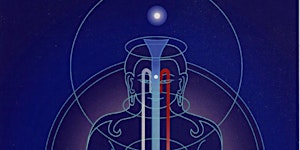
Tsa Lung is a Tibetan healing yoga that works with the subtle body of the channels and winds using breathing techniques and physical movements. Learn the fundamentals of the practice, how the channels and winds affect the mind, and experience how the practice calms the mind and induces a natural meditative equipoise.

No prior meditation experience necessary, advanced students welcome.
  • Learn about the relationship between breath and mind
  • Practice the physical yogas of Tsa Lung
  • Learn how to work with subtle objects of meditation
  • Learn how to recognize and rest in the nature of the mind

Monday, April 1, 2019

Where does it hurt?

Contemplating the body, observing the body, it can be useful to ask yourself, where does it hurt? Where is there tightness or discomfort?

Observe that pain. Witness the tension.

Don't turn away from the experience. Open up to it. Breath into it.

Looking deeply into our experience free from reactivity, we engender presence and openness. This presence and openness is vulnerable, but it also carries authority. There is something true about our experience, a knowledge of our own condition and predicament.

The practice of looking deeply into our own human condition cultivates a rich inner life. It gives rise to an inner wealth and understanding that we can share with the world, carry out into the world. The practice opens us up to what it means to be human, and an appreciation for the very fact of being at all. 


Tuesday, August 7, 2018

Buddha on the Life Changing Practice of Mindfulness


“Whoever, mendicants, should practice these four foundations of mindfulness for just one week may expect one of two results: either complete deliverance in this life or, if there is a residue of clinging, the state of a non-returner.”


On one occasion, the Buddha was staying in the Kuru kingdom near a marketplace called Khammasadhamma. The Kuru kingdom was the center of Vedic culture and the dominant political and cultural center of the area. The local culture was committed to brahmanic rituals and rites of purification and the society maintained a strict social hierarchy. The marketplace would have been filled with artisans working on their craft, traders doing business, and local religious and political leaders lobbying for power and control. It was a culture not much different than our own.

At that time and in that place, the Buddha spoke to his disciples about the practice of mindfulness, teaching what is known as the Mahāsatipatṭhāna Sutta, the Great Sutra on the Foundations of Mindfulness. This work of his revealed the core practice of mindfulness, which is central to the Buddha’s teachings and a core principle of living life according to the Dharma.

The practice of mindfulness is for those practitioners who are committed to living mindfully in order to realize inner freedom. It is a practice to overcome busyness and distraction, teaching us to let go of preoccupations and focus the mind in the present. This practice of being mindful and aware frees us from suffering, fear and anxiety, giving us the capacity to be present and engaged, to look deeply and discover the insight needed to transform our life and the world around us.  Accessible and relevant to the modern world, this teaching reveals four qualities of the mind necessary for embarking on a lifetime of practice. This practical yet profound practice teaches us how to maintain mindfulness of the body, how to experience sense perceptions and the influences of the inner and outer world, how to recognize thoughts and various mental states, and how to carry mindfulness through the varieties of our lived experience.

In the Digha Nikaya, the Long Discourses of the Buddha, the Buddha taught the practice of the foundations of mindfulness.

There is, mendicants, this one way to the purification of beings, for the overcoming of sorrow and distress, for the disappearance of pain and sadness, for the gaining of the right path, for the realization of Nirvana- that is to say the four foundations of mindfulness.

During the Buddha’s time, the local culture would have been obsessed with purifying the body, improving its condition and making it more pleasing for the sake of everyday concerns. They would have yearned for a way to purify their minds of negative thoughts and mental states, reaching out to their local Brahmin for a method of cleansing the mind and spirit. In this regard, ancient India is not much different than our own modern day world. People are always looking for an easy fix to their problems. People spend countless resources on ways to cleanse the body and make it healthier. They seek out methods that all promise to lead to happiness and a life of meaning and purpose. Celebrities of the moment all have the solution of the day available to you.

Knowing the local culture and the concerns of his audience, the Buddha taught the foundations of mindfulness as the single authentic way to purify our own body, speech and mind. He taught the practice of mindfulness as the only way to overcome sorrow and distress, pain and sadness. This single practice sets us out on the right path, on the path of inner freedom. 

Here, mendicants, a mendicant abides contemplating body as body, ardent, clearly aware and mindful, having put aside hankering and fretting for the world. She abides contemplating feelings as feelings; she abides contemplating mind as mind; she abides contemplating phenomena as phenomena, ardent, clearly aware and mindful, having put aside hankering and fretting for the world.

Four Qualities for Engaging in the Practice

The Buddha taught that when we are contemplating these foundations of mindfulness, we should be ardent, clearly aware, mindful and put aside any hankering and fretting for the world. These four qualities are essential if our practice is to be fruitful.

Ardent (Pali. Ātāpī) means to burn. It is to be passionate and enthusiastic about the task at hand. One who is not ardent lacks energy. Thus, the Buddha taught that to engage in the practice of mindfulness we need to be passionate about our work. Who among us is passionate about the work they do? 

Amateurs are passionate, to be an amateur is ‘to love’. Amateurs are curious and have lots of questions, and the answers to those questions lead to more questions resulting in a constant state of wonder. Approaching the practice with a beginners mind, we are fueled by wonder and fascination. Amateurs are passionate enough to do the work it takes to orientate themselves to the worlds in which they inquire. Their passion allows them to build the framework necessary to explore deeper. Their passion carries them beyond the superficial layers, it fosters depth and the depth feeds the passion. Passion coupled with orientation, a framework for exploration and the ability to see deeper are the prerequisites for becoming an expert. Being ardent, we start as amateurs in the practice and end up as masters.

Clearly aware (Skt. samprajanya) is a vigilant awareness that is fully alert to the present moment. The Buddha describes this vigilant awareness in the Satipatthanasamyutta:

And how, mendicants, does a mendicant exercise clear comprehension? Here, mendicants, for a mendicant feelings are understood as they arise, understood as the remain present, understood as they pass away. Thoughts are understood as they arise; perceptions are understood as they arise…It is in this way, mendicants, that a mendicant exercises clear comprehension.

Being clearly aware means being present in a non-reactive and non-judgemental way. It is like a watchmen in the tower, looking out over his domain, knowing who is coming and going. It is sharp, attentive and focused.

The next quality of the mind that must be developed is mindfulness itself. Mindful in this sense means to be mindful of the object of our intention. Attention follows intention, so we need to be clear about what we are being mindful of. Once we have set a clear intention, mindfulness maintains our attention on that focus. When the mind wanders and becomes distracted, mindfulness brings us back. Mindfulness can be described as a rope that ties a monkey to a stake. As the monkey of the mind moves and jumps around, the rope always brings the monkey back.

The last quality of the mind required for this practice is to put aside hankering and fretting for this world. Set aside your attachment and aversion, your craving and fixation. Remain in a state free from judgment and speculation. Let go of reactions to whatever is coming up in your experience, simply maintain the continuity of mindfulness and vigilant awareness with curiosity and enthusiasm. 

Cultivating these four mental qualities of being ardent, clearly aware, mindful and setting aside our reactions to our experience, we can move through each of the four foundations of mindfulness, contemplating the body as body, feelings as feelings, mind as mind, and phenomena as phenomena; simply being aware of our experience in a non-reactive and non-judgemental way.

These four qualities of mind are the way in which we engage in the practice of mindfulness. Next time, we will look into the practice as it pertains to contemplating one’s own body, feelings, mind and experience.

Thursday, January 11, 2018

This is the practice.

This morning as I was in the midst of doing a hundred prostrations as part of our 100 day practice intensive, the thought occurred to me, "I should stop and just meditate."

Which was followed by, "This is the practice."

There was so much freedom in that realization. I was no longer pushing myself to finish my prostrations, no longer worried about doing other 'more important' practices.

I simply did prostrations.

I laid my own body, speech and mind down again and again. Offered my own body, speech and mind as the basis for the practice to unfold, the basis for achieving liberation, and the basis for bringing benefit to others.

Namo Manjushri. Namo Sushri. Namo Uttamshri, Soha.

Namo Manjushri: I prostrate to the ever-youthful, awakened body.
Namo Sushri: I prostrate to glorious, virtuous speech.
Namo Uttamshri: I prostrate to authentic, awakened mind.
Soha: So it is. 

Our practice is embodied. It isn't just the meditation cushion, everything is included. Even the struggle.

Friday, December 29, 2017

The garden you tend to most.

By tending to others and the world around us, we tend to ourselves.

Our conception of who we are is quite limited and limiting. We conceive of ourselves as our bodies, our feelings and perceptions, our thoughts, beliefs and positions. We often feel separate from others, segregated to a lonely and isolated existence. We have a deep yearning for connection with nature and contact with others. Most of us can intuit that our conception of who we are is limiting. We feel that bondage.

The Buddha taught that the examination of the self begins with examining the five skandhas. The self is composed of these five skandhas, and by examining the five skandhas we can arrive at the wisdom of selflessness.

The first of the skandhas is the rupa skandha, or aggregate of form. The rupa skandha refers to not only our own physical form, but more generally to everything that we can see, hear, smell, taste or touch. All matter is rupa skandha. Our environment and all beings, the entire universe, all that appears and exists is rupa skandha, our aggregate of form.

Our own body is the result of our past actions, and thus the most karmically significant rupa skandha based on our past experience. Our own physical body is the garden that we tend to daily, that we look after the most and identify with. But our rupa skandha is not only our physical body, it is also the environment and world around us.

Start seeing all form as your form. Start seeing your 'self' as your setting, your neighborhood, your world. When we appreciate our rupa skandha in this way, we want to take good care not only of our own body, but the environment and beings around us.

Start by tending to your own physical body with gentleness, attentiveness and kindness. Extend that to your neighborhood and community. Extend that to the whole world.

Let your gentleness, attentiveness and kindness spread.

By tending to others and the world around us, we tend to ourselves.


Wednesday, September 20, 2017

Immovable.

The first of the four foundations of Dzogchen meditation is immovable. As a preparatory practice we want to settle the mind and be able to recognize and abide in the nature of mind. Having been introduced to the Dzogchen view, we can sustain that view and eliminate errors and deviation through the practice of the four foundations.

First, we rely on the three immovables.
Immovable body, like a mountain.
Immovable gaze, like a lion.
Immovable awareness, like the sky.

Immovable body, like a mountain. The body is relaxed and uncontrived, seated in the Vairocana posture. Don't chase after feelings or sensations, simply rest the body, breathing naturally. Don't itch, don't alter, don't adjust.

Immovable gaze, like a lion. Leave the sense organs open and uncontrived, free from grasping. The gaze is open, like looking over a vast mountain valley, but steady like a lion. A dog's gaze chases after everything that appears before it, hopping from one focus to another. We don't want to focus on any particular object or point, keep the gaze steady, but expansive, like your field of vision is the space around you.

Immovable awareness, like the sky. Whatever clouds or weather moves through the sky, the sky remains unstained. There is no good or bad, nothing to accept or reject, nothing to hold onto or push away. Relax in an uncontrived, open awareness free from thoughts or fabrication.

We can also describe the immovable state in terms of outer, inner and secret.

Outer is the body in the Vairocana posture.
Inner is uncontrived, without altering or chasing, without effort. Free from expectation, hope and fear.
Secret is kadag, original purity. Recognize the potency of rigpa arising from the ground of original purity and let everything dissolve back into the ground of original purity, free from any reaction or judgement.

Relying on the unique Dzogchen mindfulness we sustain the view of rigpa. Without being distracted by appearances or the internal display of mind, we simply rest in an experience of unceasing clarity.

As we gain greater stability in immovable state, we enter the single-pointed state.


Wednesday, June 21, 2017

Upcoming Meditation Workshop!


 TIBETAN TSA LUNG
A Healing Yoga of Breath and Movement


Tsa Lung is a Tibetan healing yoga that works with the subtle body 
of the channels and winds using breathing techniques and physical movements. 
Learn the fundamentals of the practice, how the channels and winds 
affect the mind, and experience how the practice calms the mind 
and induces a natural meditative equipoise.
No prior meditation experience necessary, advanced students welcome.

Sunday, July 9
10 am - 12 noon


By donation (recommended $10)
1716 NW Market St 
Seattle, WA 98107

REGISTER NOW

For more information contact Greg at siddhearta@gmail.com.

Monday, January 9, 2017

Reverence.

Buddhanature awakens a certain reverence in us.

It is always present, but also inaccessible in our experience. We catch glimpses of it, moments when the clouds dissipate revealing our spacious, clear and peaceful natural condition.

Most of the time we are overwhelmed by everyday concerns. Our minds are busy, distracted. We may have a vague intention to bring benefit to others, but we do not know how to make this intention fully manifest.

Fighting against our own thoughts and emotions, we are unable to enjoy our natural condition.
Caught up in hope and fear, our natural fulfillment escapes us.
Collapsing into our own perspective and situation, we are unable to bring benefit to others.

The basis, our buddhanature, is always present.
The result, our buddhanature fully manifest, seems entirely remote.

With reverence in mind, we prostrate to the embodiment of the Three Jewels, the nature of our own body, speech and mind. Paying homage to our unborn natural condition, we open the doorway to actualizing our natural state.

Namo Manjushri. I prostrate to the glorious, youthful awakened body.
Namo Sushri. I prostrate to the excellent qualities of awakened speech.
Namo Uttamshri. I prostrate to the supreme awakened mind.
Soha. So it is.   

Saturday, January 7, 2017

Wheel of tsok.

This meat-
all that appears and exists, the nature of the five Buddha families,
my own body, inseparable from all beings,
we are all impermanent, changing from one body to the next,
changing bodies like clothes,
the mouse becomes the hawk, the cow the crops, lifetime after lifetime.
I am often stricken with the desire to be beyond all this,
but ours is the inherited responsibility to live a life of great purpose,
to be compassionate, generous and kind,
to discover our natural freedom in this very body of flesh,
for the benefit of all beings.  
We should enjoy, question and respect,
but never assume, demean or disregard.
Emaho!

This wine-
this sublime nectar of the dakinis,
with its fragrant bouquet pervading the extent of space,
its bountiful mouthfeel of suchness,
I enjoy the one taste of all samsara and nirvana,
the union of bliss and emptiness.
Everything is encompassed by this single drop,
all perceptions, qualities and experiences dissolving
into the originally pure dharmadhatu, the basic space of phenomena.
Seeing through the intoxicating nature of all appearances,
the Great Mother, Prajnaparamita, is revealed
beyond all thought, description or imagination.
Ah la la.

These are my samaya substances.  This is my commitment.
My vow not to turn from this world.
My commitment to remain, working for the benefit of beings.
Freely enjoying this wheel of tsok,
with nothing to be renounced or forsaken,
I consume all conditions as fuel for my practice.
May the blessings of the Trikaya Guru and assembly of dakinis
soften our hearts and transform our minds!
May the blessings of this completely virtuous Younge practice tradition ripen and flourish!
May we all gain accomplishment as one mandala!
Emaho Ah la la ho!

Wednesday, July 13, 2016

What are you holding onto?

As you go about your day, what do you find yourself getting hung up on?

Is it your form?  Do you find yourself constantly worrying about how you look?  Are you beautiful or ugly, is that blemish too noticeable?  Too fat, too thin, too tall, too short, feeling strong or feeling weak; what are you hung up on?

Are you stuck on your feelings?  Do you find yourself running away from pain, doubt or sadness?  Do you chase after things that make you feel good, or experiences that are thrilling and exciting?  If you don't feel just right, how does it affect your day?

Are you holding onto your own perception?  Do you stick to your version of right and wrong, playing out storylines and arguments in your head?  Is your perspective the best perspective?  Does others perception of you determine how you feel about your status or respect?  What happens when you think you are about to lose control?

Are you caught up in various mental formations?  Are your ideas, stories, and opinions really important?  Do you rigidly hold to your beliefs or philosophy?  Are there memories that come up in your head day and night that you cannot escape?

Maybe you don't hold onto any of those and you are certain of who you are.  I know who I am, and yet who I am?  I experience the world through sight, sound, smell, taste and touch, do I chase after any of those?  Surely. 

We hold onto many things throughout the day, chasing after many more.  All of those constitute our experience and who we are, but we are none of those things.  They are the nuts and bolts, the beams and rafters, yet we are none of those things. 

If we are none of those things and yet they make up all that we are, then what are we?

Friday, August 15, 2014

Five Elements Yoga.

The ancient wisdom traditions are all connected to the concept of working with the elements.  Man and nature are intimately intertwined and their deep insight into that nature evokes a strong connection with the world around them.  The five elements are earth, water, fire, wind and space.  This may seem like an archaic and primitive understanding of the universe, but let's look at the manifestation of these five elements.

External world
We are all familiar with the qualities of the elements in the phenomenal world.  Earth is solid, water is fluid and cohesive, fire is radiant and hot, wind/air is constantly moving even when not apparent, and space is the container in which all of this plays itself out.  Each of these can be further examined in terms of their characteristics and qualities as far as the mind can elaborate.  

Physical Matter
Solid, liquid, heat and gas.  We are all familiar with the physical properties of matter from elementary school.  Earth is solid, water is liquid, fire is heat and wind is gas.  Of course don't forget space which accommodates all of these states.  The interesting thing here is that we start to see that all of these five elements are present in one element- water.  Ice has more earth properties, water is water and water vapor is the wind element.  All of these states manifest based on the amount of heat or fire in the system, which itself is contained by space.  So if this is true for water, what about iron? 

Atomic Particles
Let's look at an atom.  Earth is the nucleus, water is the chemical bonds that creates a sense of cohesion, fire is the heat or energy of the system and wind is the constant movement of the atom.   Space pervades the entire particle.  You are probably better at quantum physics than I am, so please explore deeper. 

Our own bodies
Our own bodies are composed of physical matter, earth.  Of course we are 70% water, blaze with the heat of the fire element at 98.6' F, are 100% energy (wind) and 99% space (may need to check my math).  Much of Ayurveda and traditional Chinese medicine is based on the balance of the five elements and how imbalances effect the rest of the system.  Interesting stuff if you like to read. 

Personal experience
We all have experience feeling grounded, a predominance of the earth element.  With the water element we feel connected, experience a deep sense of peace and calm.  Fire is creative, an inner radiance and intuition.  Wind is thoughts and concepts.  Space is all-pervasive.  Too much earth and we feel heavy and tired.  Too much water and we are emotional wrecks.  Too much fire and we get angry and hot tempered.  Too much wind and we are agitated and restless.  Too much space and we are, well, spaced out.  

Meditation
All five elements are naturally present in our own awareness.  With the earth element we discover a natural meditative stability.  The water element is a calm and peaceful mind.  The fire element is an inner radiance and clarity.  The wind element is movement even within stillness.  The space element is the expanse of awareness without center or limit.  

Dissolution
When the elements dissolve, either in our meditation or at the time of death, we can recognize their dissolution which serves as markers on the path.  Earth dissolves into water and appearances have a mirage-like quality.  Water dissolves into fire and we experience wafts of smoke-like images.  Fire dissolves into wind and we experience firefly-like appearances.  Wind dissolves into space and we experience the clear light nature of mind, an innate calm and utterly lucid awareness like the deep blue sky just before sunrise.  Rest in that state.  

Death
We should become familiar with the dissolution of the physical elements at the time of death, both concerning our own death and also supporting our loved ones as they set out on the journey.  The dissolution of the earth element is marked by losing your strength and outer movements.  The dissolution of water is when the saliva and urine is no longer produced, the body becomes dry and water is no longer accepted or needed.  The dissolution of fire is when the heat of the body recedes to the heart center, the body slowly continuing its process of shutting down.  The dissolution of wind is the gradual slowing of the inhale and exhale, leading up to the final breath as a long exhale.  It is important not to disturb the body at this time, because the person is starting to experience the inner dissolution of the elements leading up to and culminating in the clear light nature of mind.  Their ability to recognize and abide in that nature of mind determines their next rebirth, if they become swept away in appearances or remorse the winds of karma will start to stir and helplessly propel you along on your journey.  This is why it is important to practice and familiarize yourself with these five elements in this life, when you can still act of your own volition.

The practice of the five elements is a very simple and pragmatic way of understanding our world and our own experience.  It orients you with a bigger picture and makes the complex approachable.  Orienting yourself in this way, you can continue to investigate and elaborate on your understanding to the extent that the mind can reach, a true psychonaut. 

As long as the mind exists, their is no limit to the extent of space.   

Friday, April 11, 2014

Vairocana

OM AH HUNG BHAGAVAN VAIROCANA OM

Vairocana is one of the Five Family Buddhas.

His pure land is Akanishta, meaning Unsurpassed, representing the true nature of reality in which emptiness and dependent origination are inseparable.  His color is white, representing the activity of pacifying conflict, disease, problems and obstacles.  His hands are in the mudra of teaching the Dharma holding a Dharma Wheel, or Dharmacakra- representing the continual motion and change that forever turns and brings about transformation and development.

Vairocana is the Buddha that represents completely purified ignorance.  Ignorance is like a blank dullness, that state of unknowing where we don't know what to do to make our life meaningful.  Vairocana represents the transformation of that ignorance into the wisdom of the true nature of reality, thoroughly understanding the nature of our own mind and the world around us and how we are to unite compassion and wisdom in order to fulfill our own aims and the aims of others.     

He rides a lion possessed with all the major and minor marks.  The lion is the sovereign of all animals.  His sovereignty is not appointed by divine right or out of self-righteousness or self-promotion, it is the rightful authority to act.  To not act would be to fall from wisdom into the ignorance of selfishness and fear.  In this way, the lion is an unerring source of refuge and protection, carrying the bewildered and confused into the peaceful grove of clarity and insight. 

In regard to our own mind and self, Vairocana represents the aggregate of form.  We are all very attached to our physical bodies; how we feel, how we look.  Our fixation on our own condition and state lead us down the rabbit hole of self-grasping and ignorance, further intensifying our fear and discontentment.  As we purify this self-grasping and transmute it into wisdom and insight, we are able to break free from the confines of our own limited view and understanding.  We can embrace a larger scope.

When we deeply contemplate and integrate the wisdom and symbolism of Vairocana, we can learn how to transmute ignorance and selfishness into an opportunity for wisdom and purpose.  We are able to step outside of fear, doubt and uncertainty.  We attain the awakened form of the Buddhas that transcends the confines of place and time.  The form or shape of our life is one in which we guide, teach and lead others out of confusion and habitual patterns into wisdom and clarity.  Our body becomes like a rainbow- apparent yet empty of existing in any fixed manner- dancing like an illusion that carries out the benefit of others, teaching them how to overcome conflict and problems, setting out the path and providing the support and resources to embody their own awakened form.

To attain such a state would be unsurpassed- for not only would you have fulfilled your own aims, but you would have fulfilled the aims of others. 

Go ride that lion.